Curiosity as Care: Early Practices of Collecting
Long before museums, databases, or digital clouds, the urge to collect was already shaping how memory could materialize itself. Objects were gathered, studied, and arranged as a way to understand the world, but also a way to situate oneself in it. During the Renaissance, this impulse took physical form in the intimate spaces known as studiolos and then cabinets of curiosities. These early collections were carefully constructed expressions of identity, curiosity, and longing. They reveal how collecting emerged as both a personal and cultural practice, one rooted in the desire to organize and commemorate experience, narrate the self, and give permanence to fleeting encounters with beauty, knowledge, and the unknown.
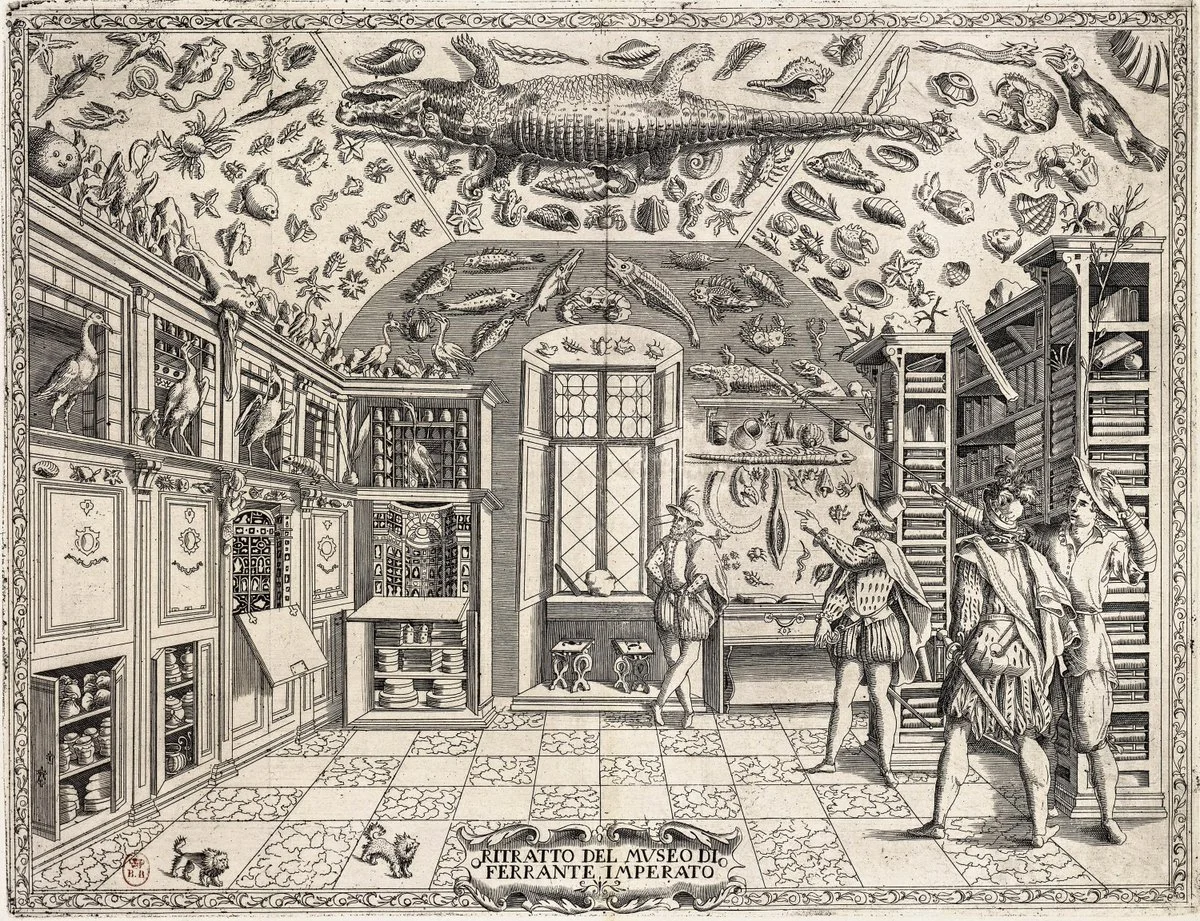
Apothecary Calzolari's Cabinet of Curiosities
During the Renaissance, the studiolo acted as a private study room designed for reading, reflection, and retreat. These rooms stand as one of the earliest forms of the personal archive. This is where scholars and nobles would carefully curate an assemblage of books, works of art, antiquities, scientific instruments, and rare objects. Each item in these collections functioned symbolically and contributed to a visual language that worked to present the collector’s intellect, virtue, and worldliness. The studiolo became a space where objects spoke of class, education, taste, and engagement in classical heritage and global exchange.
Collecting within the studiolo was a creative practice where the owning scholar aimed to present to the world how they wanted to be perceived. Objects were chosen for what they represented about history, scholarship, or philosophical reflection. Eastern artifacts expressed worldly curiosity, libraries demonstrated intellectual authority, and artistic fragments signified timeless ideals. Through carefully curated selections and arrangements, the collector shaped a cohesive portrait of their identity through an environment where material culture became narrative form.
An example of this appears in the Studiolo from the Ducal Palace in Gubbio, where intricate cabinetry frames representations of musical instruments, scientific tools, armor, and symbolic emblems. Painted images of books mirror a renowned library, blurring the line between the real and the represented, and emphasizing that the studiolo was not just a container for objects, but a space of intellectual performance, an archive used for self expression and invention.
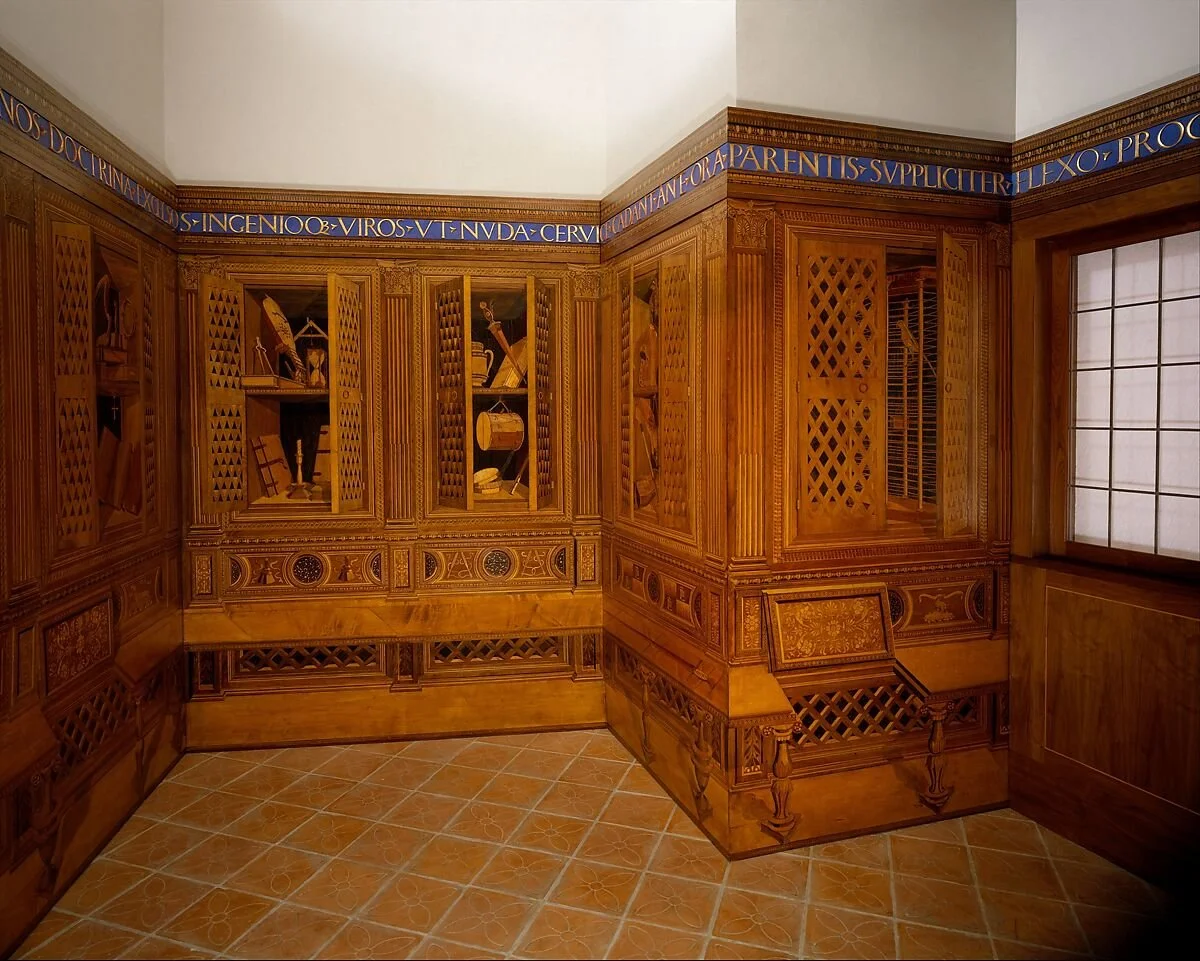
Studiolo from the Ducal Palace in Gubbio
By the mid-sixteenth century, this instinct to collect expanded into the cabinet of curiosities, also known as the Wunderkammer. Unlike the studiolo, the cabinet presented a more encyclopedic and diverse scope. Common objects included natural specimens, minerals, taxidermy, ethnographic artifacts, scientific instruments, devotional objects, and artworks that coexisted within these dense displays. These collections were organized less by discipline and more by wonder and curiosity. The Wunderkammer aimed to present the world through fascination, spectacle, and juxtaposition.
Cabinets served as early public/private spaces of learning and fascination. They functioned as precursors to modern museums, though without the classificatory systems that museums often impose. Here, order existed beneath chaos: objects were sometimes grouped according to categories such as natural versus artificial or sacred versus scientific. Yet the overwhelming density of the displays resisted clarity, inviting discovery and curiosity rather than control.
In these cabinets, one could often see signs of disarray, such as a casually placed note or an object out of alignment, suggesting that these collections were not static archives but evolving ones. Cabinets invited continuous revision, being constantly re-shaped by new acquisitions and shifting interests. Symbolic objects linked to mortality, including preserved remains or memento mori, often punctuated the displays. These reminders anchored the pursuit of wonder to the inevitability of loss, presenting collecting itself as a response to time’s passage.
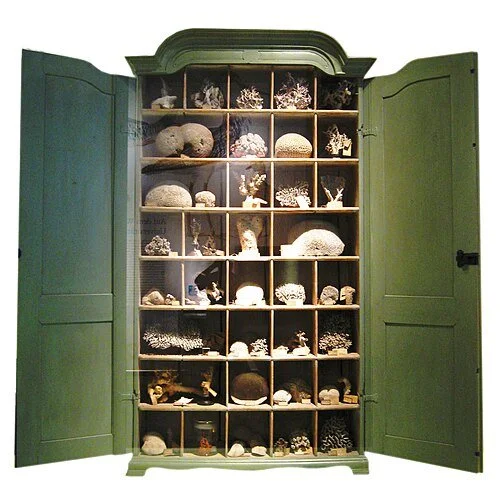
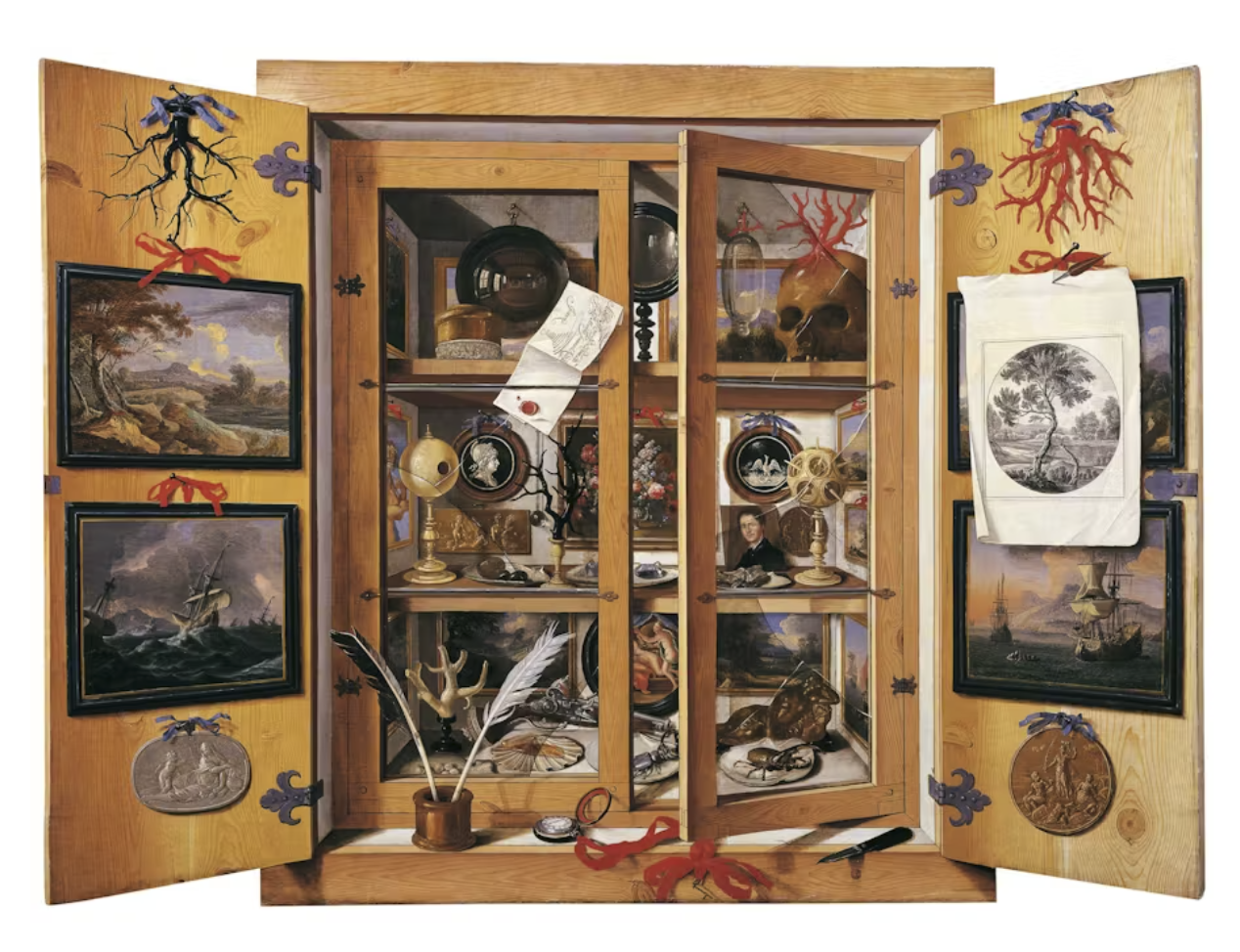
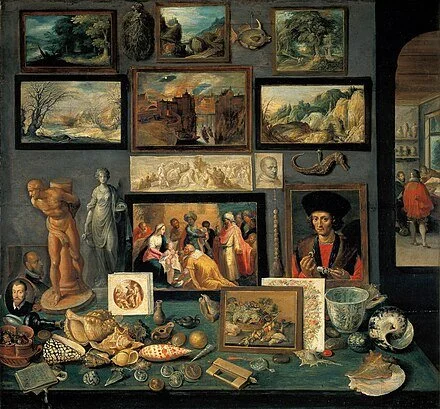
Together, the studiolo and the cabinet of curiosities reveal a shared human impulse: to gather, order, and preserve as a means of understanding both the world and the self. These early archives were not just repositories of objects, but a method of actively shaping memory and identity. What was collected gained importance, as what remained outside the collection disappeared from the narrative. Archives became systems of meaning, tools for constructing histories and defining whose experiences endured.
That impulse continues today, as archives now exist more widely in traditional spaces such as museums and libraries, and also in non-traditional settings such as personal collections, family albums, social media timelines, and cloud storage. They operate across physical and digital realms, shaping how memories are curated, edited, and remembered.
What is chosen for preservation?
What is allowed to fade?
And how do those decisions shape personal and collective identities?
It is within these lingering questions that the archive continues to evolve as both a space of storage and a site of meaning, memory, and becoming.