Welcome
I have found that I like to keep track of what I am looking at, listening to, reading, eating, thinking about, and generally absorbing. Not because everything I encounter is important, but because I think the accumulation of these small things eventually becomes a record of who I am in this moment, what I am thinking about, and how it ultimately affects what I do and what I become.
This is kinda like a personal archive of my daily consumption and the things that stick with me. Whatever inspires me, teaches me something, makes me feel something, gives me an idea, or just catches my attention. I am interested in how these unrelated things begin to exist alongside one another, and in remembering what I was doing and consuming at this point in my life when I look back on it in the future.
Here I am sharing the things that shape ME!
I may also post essays/writings along with daily documentation.
EDIT: As of August 2026, I think I am switching over to Substack for all text-based work and thoughts…
Gerber/Hart LQBTQ+ Library and Archives Visit
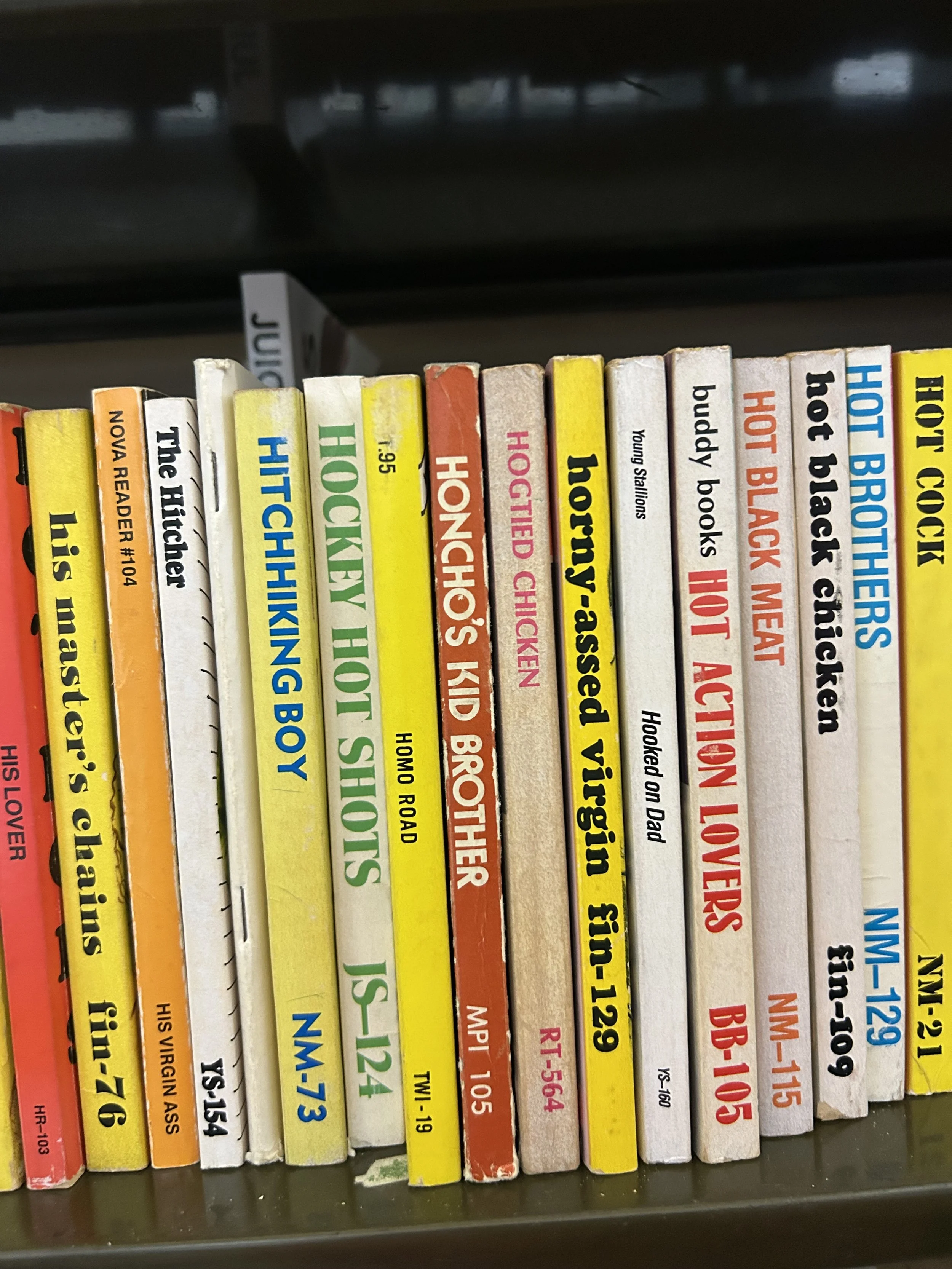
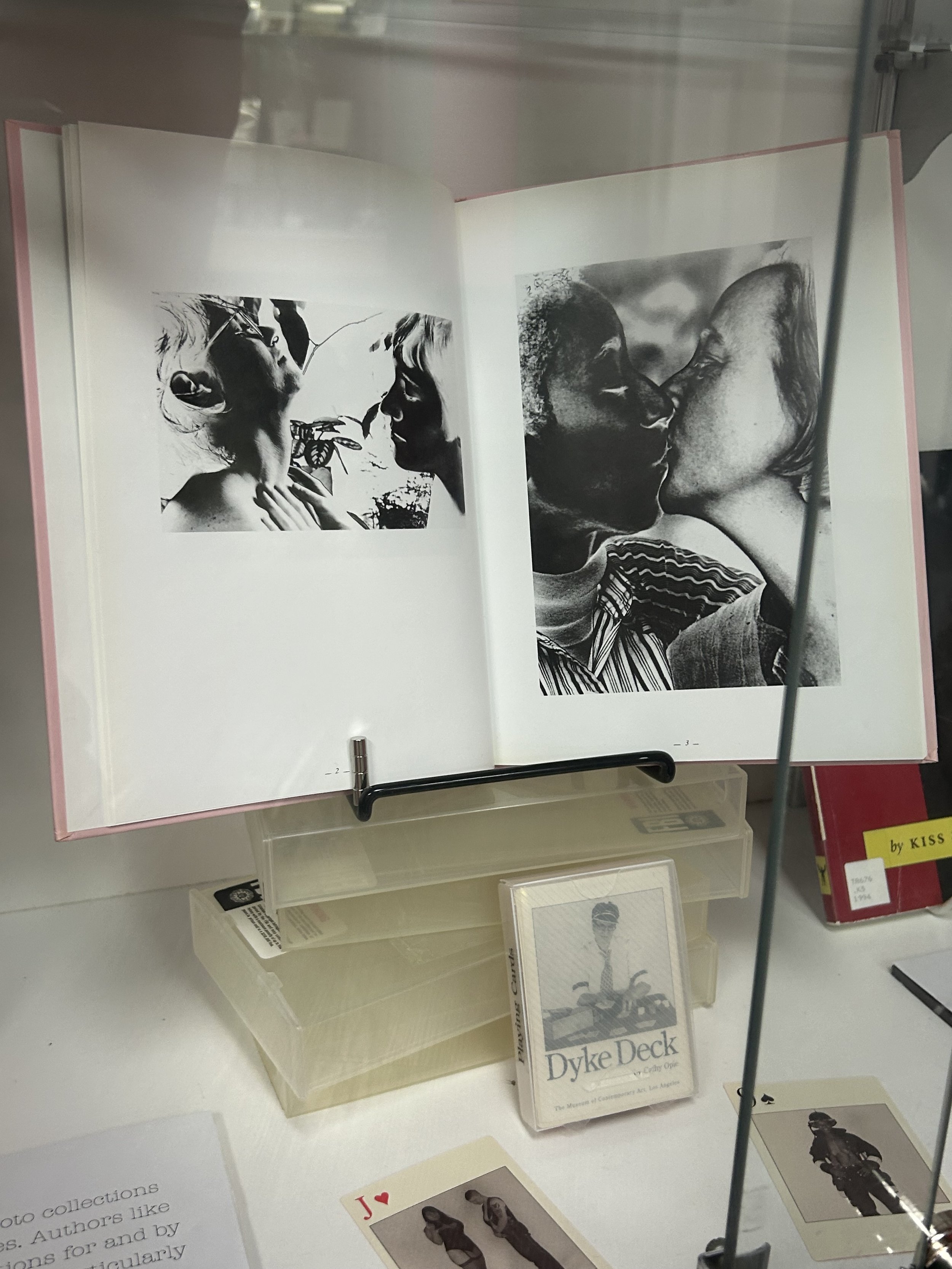
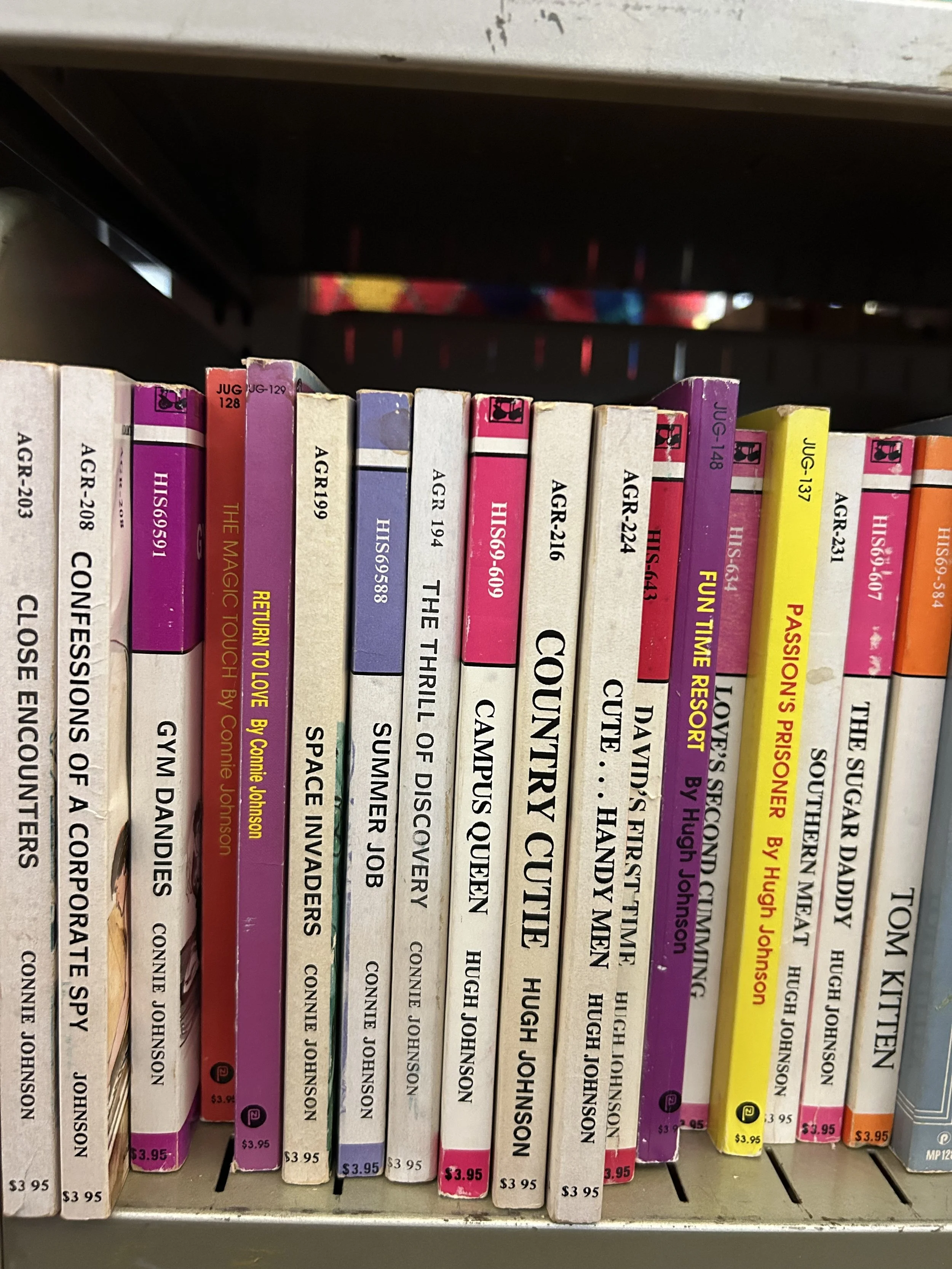
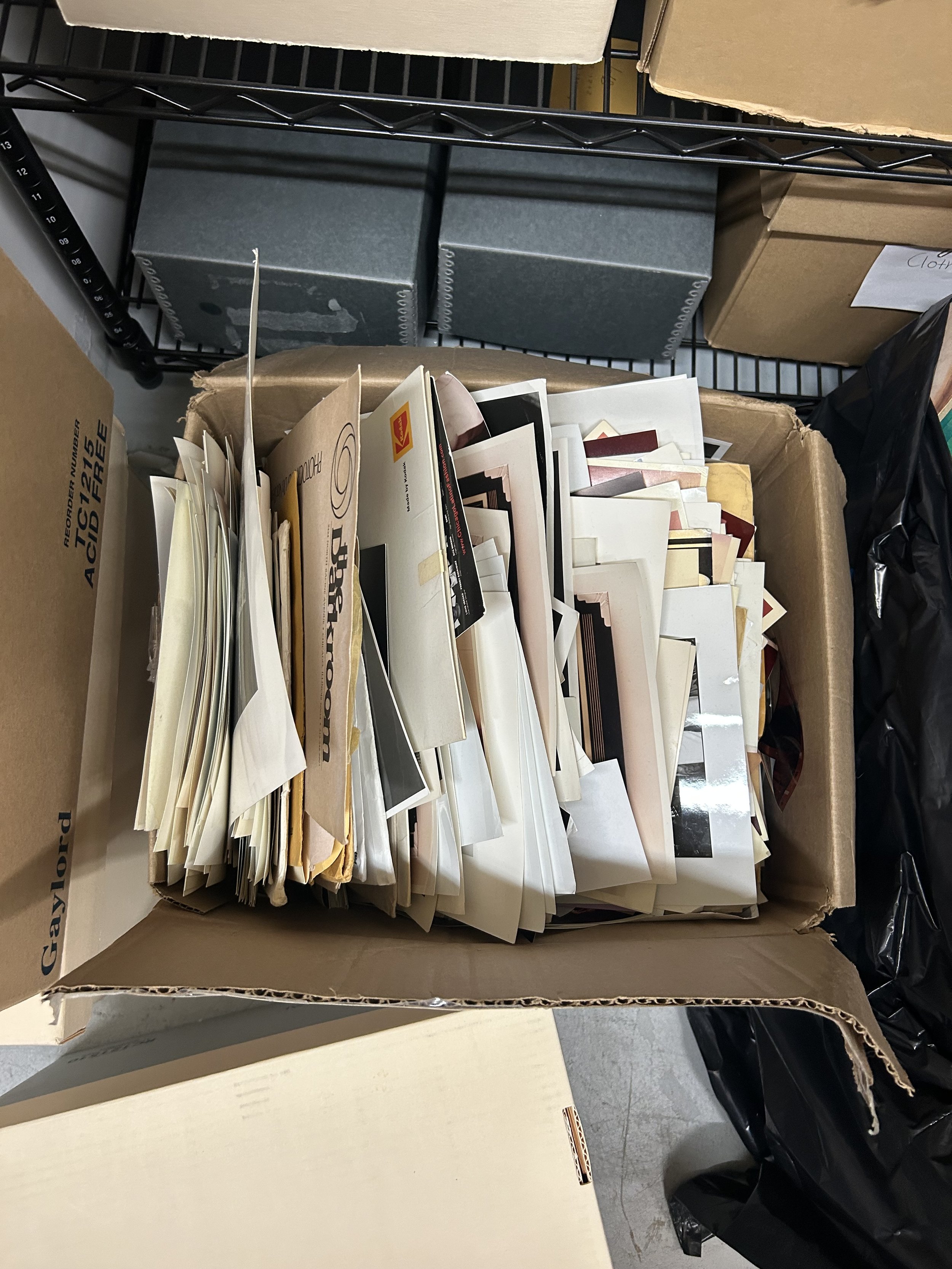
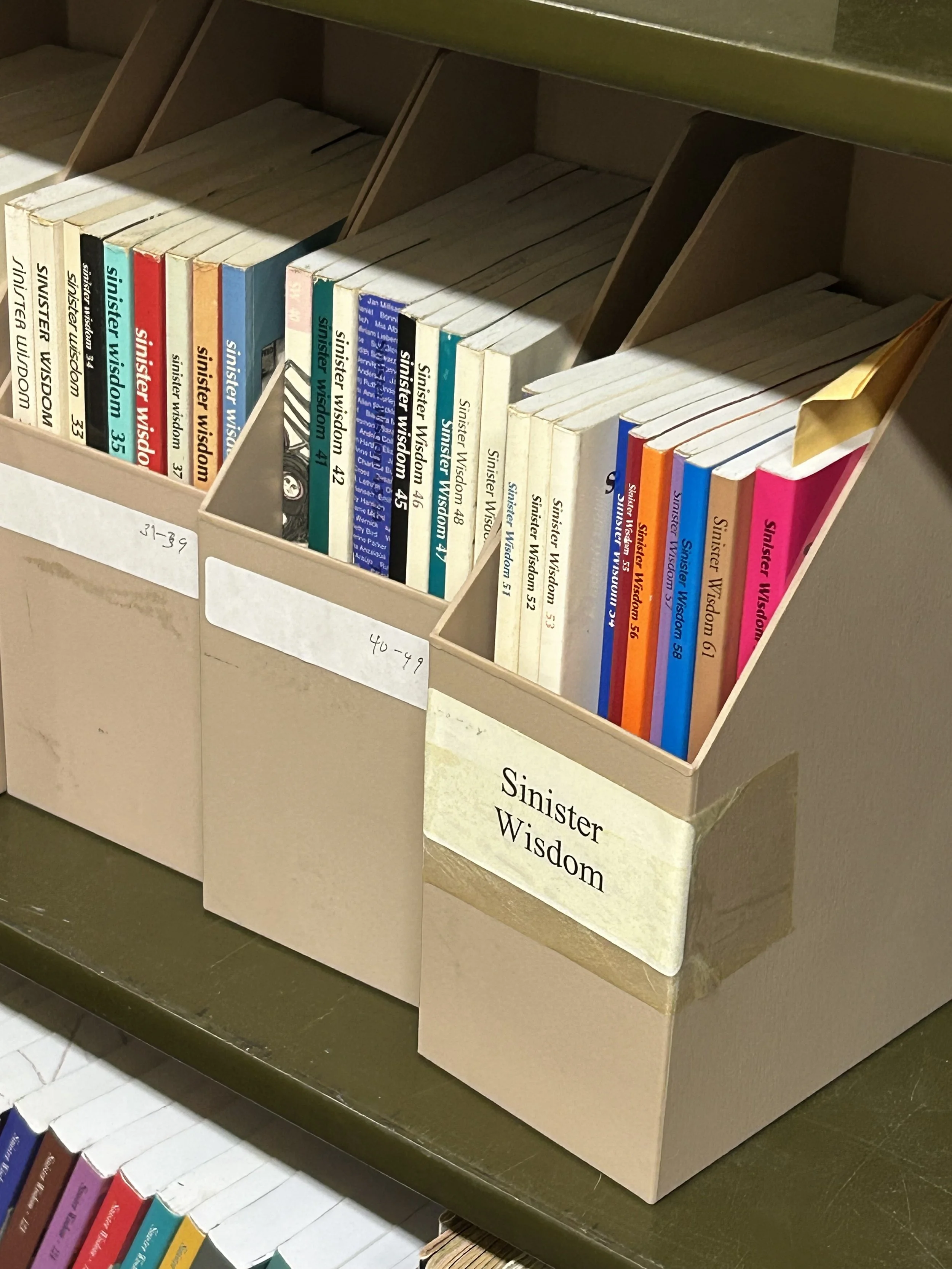
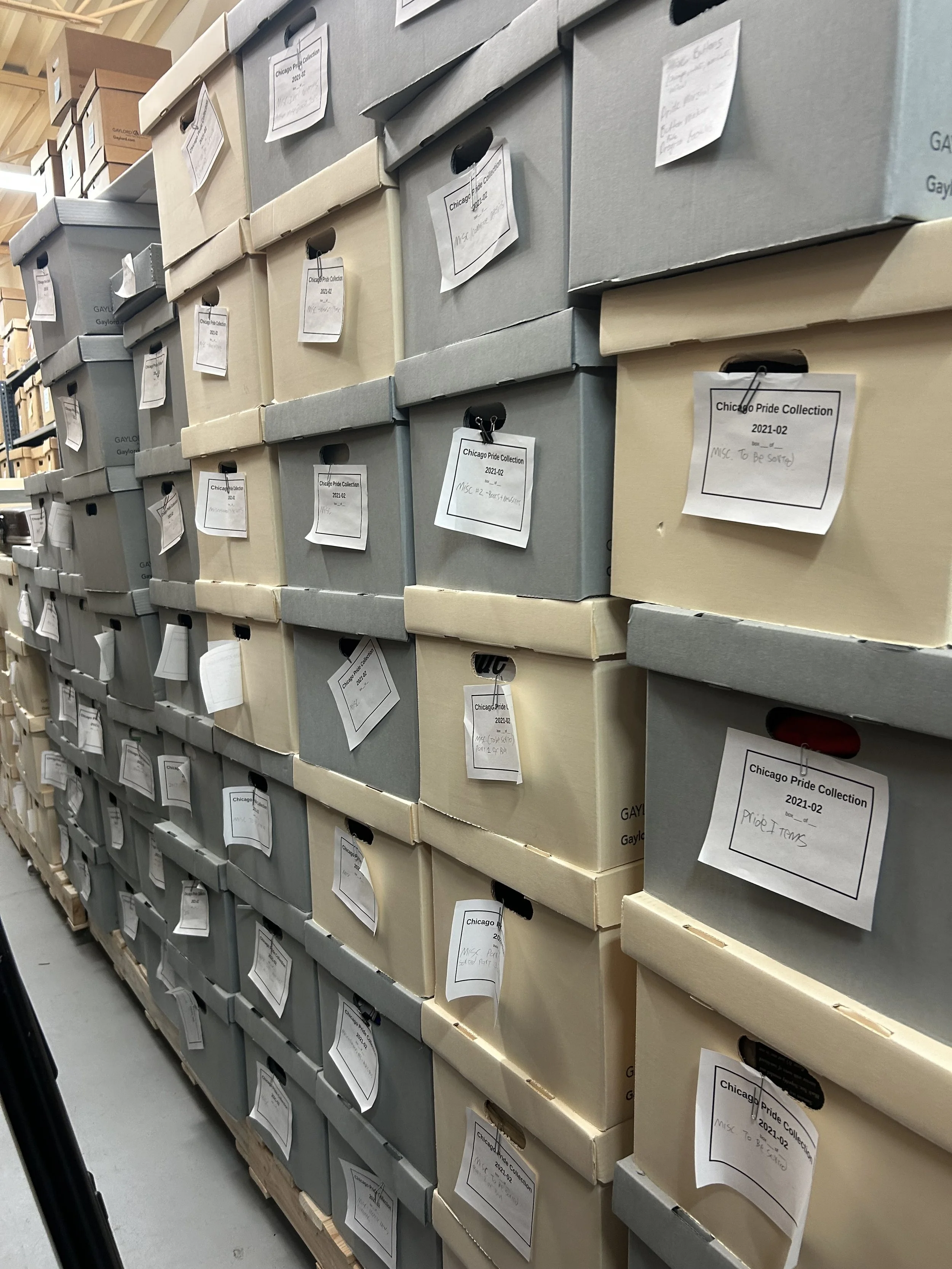
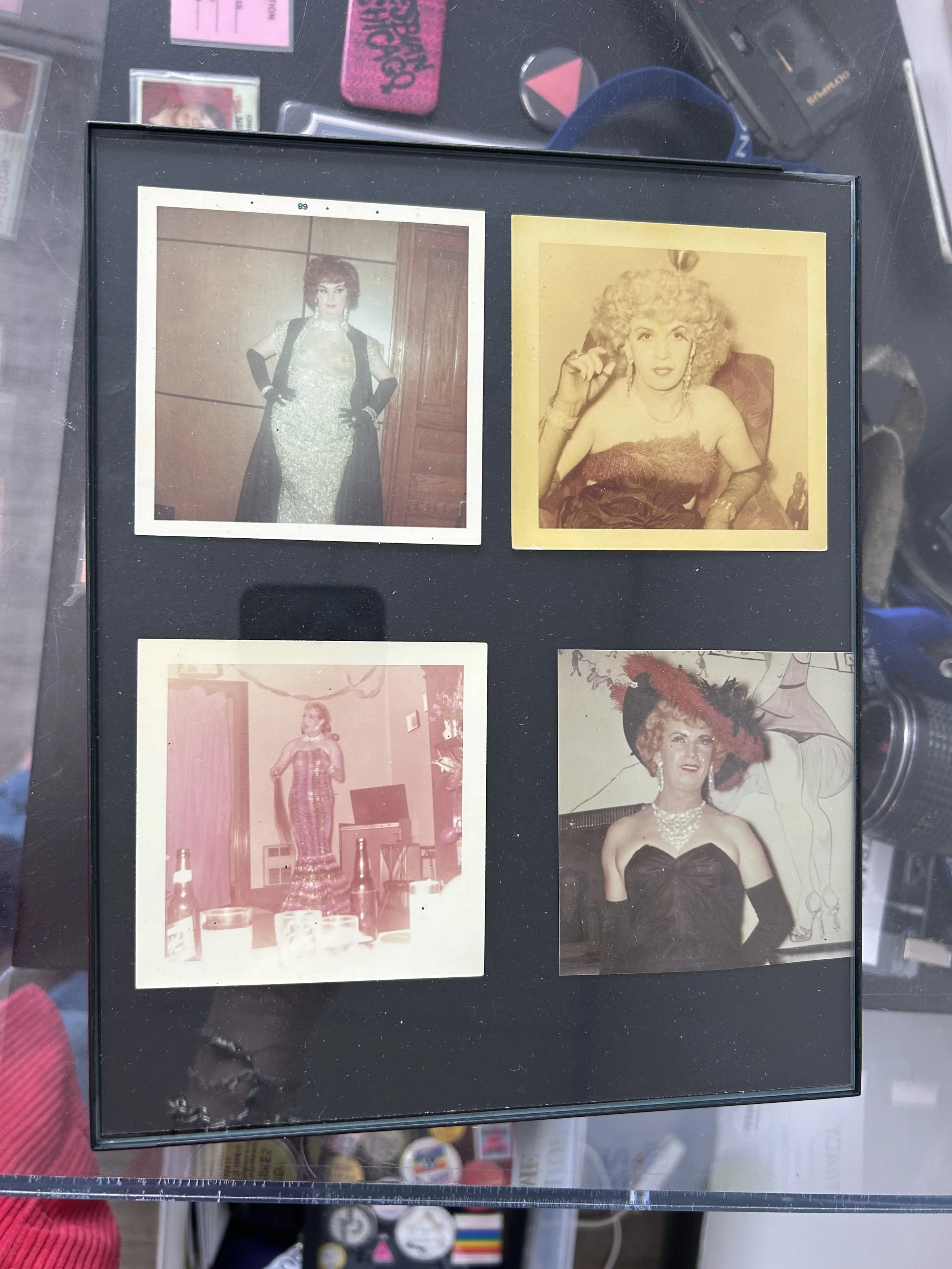
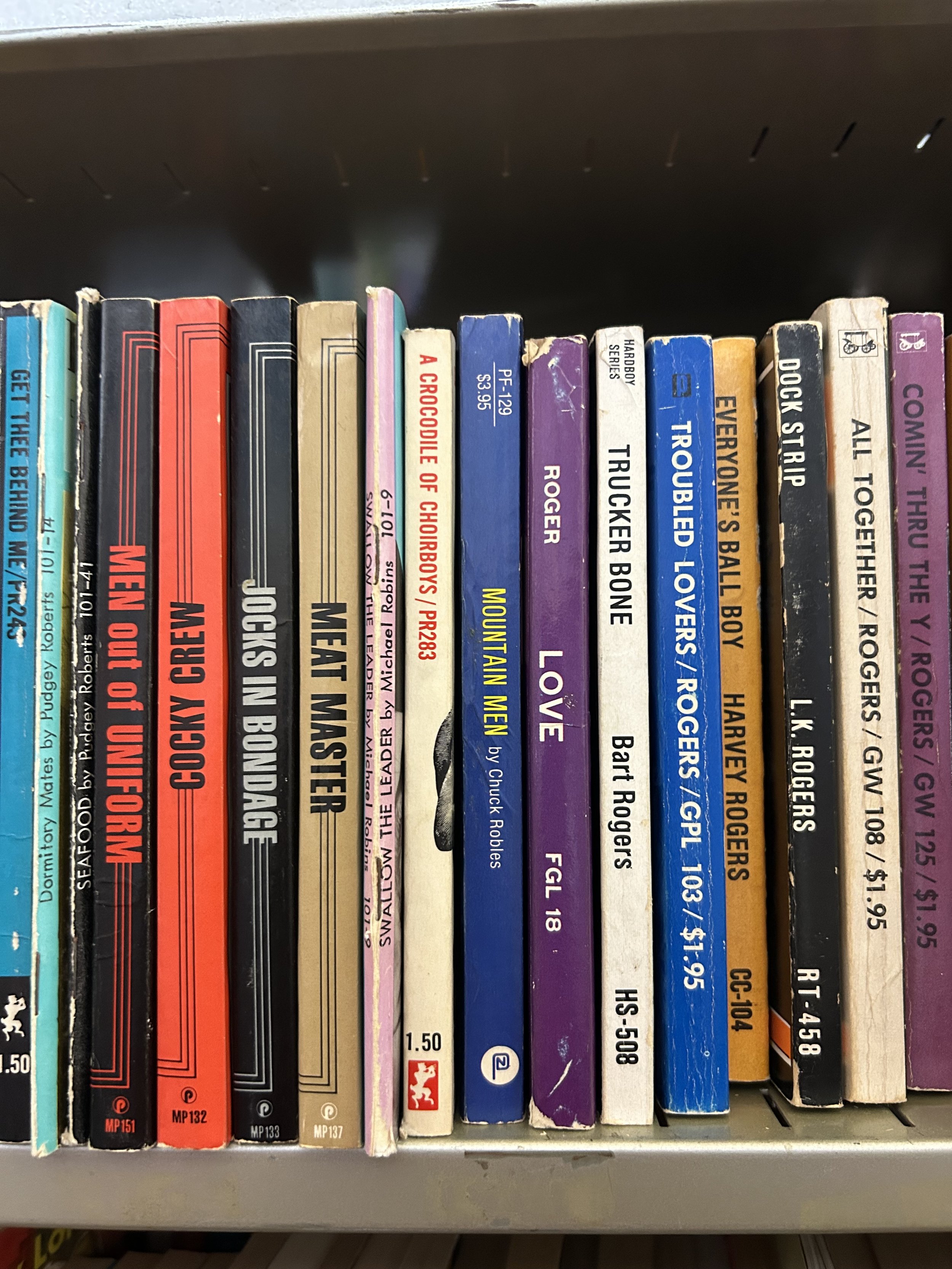
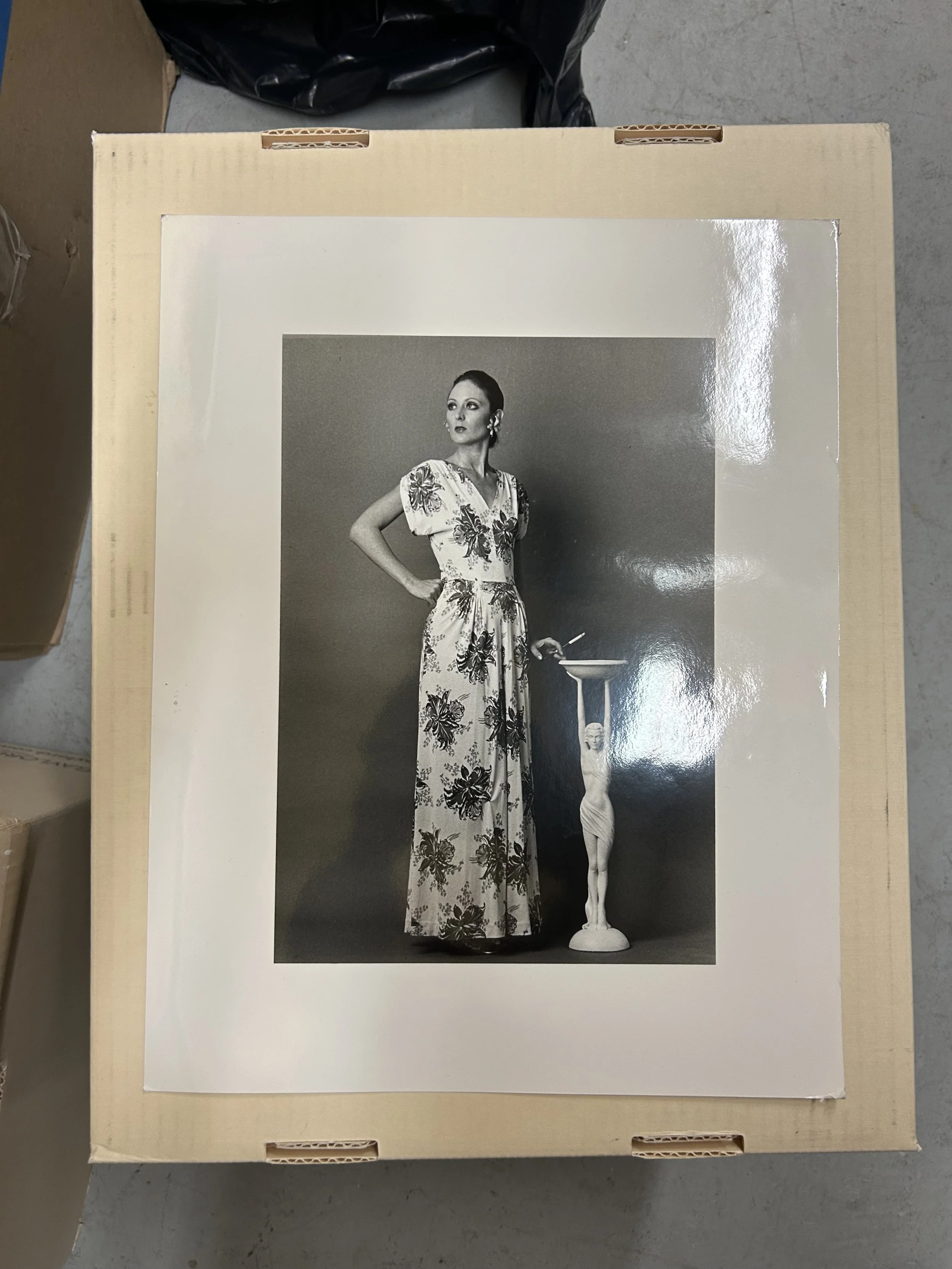
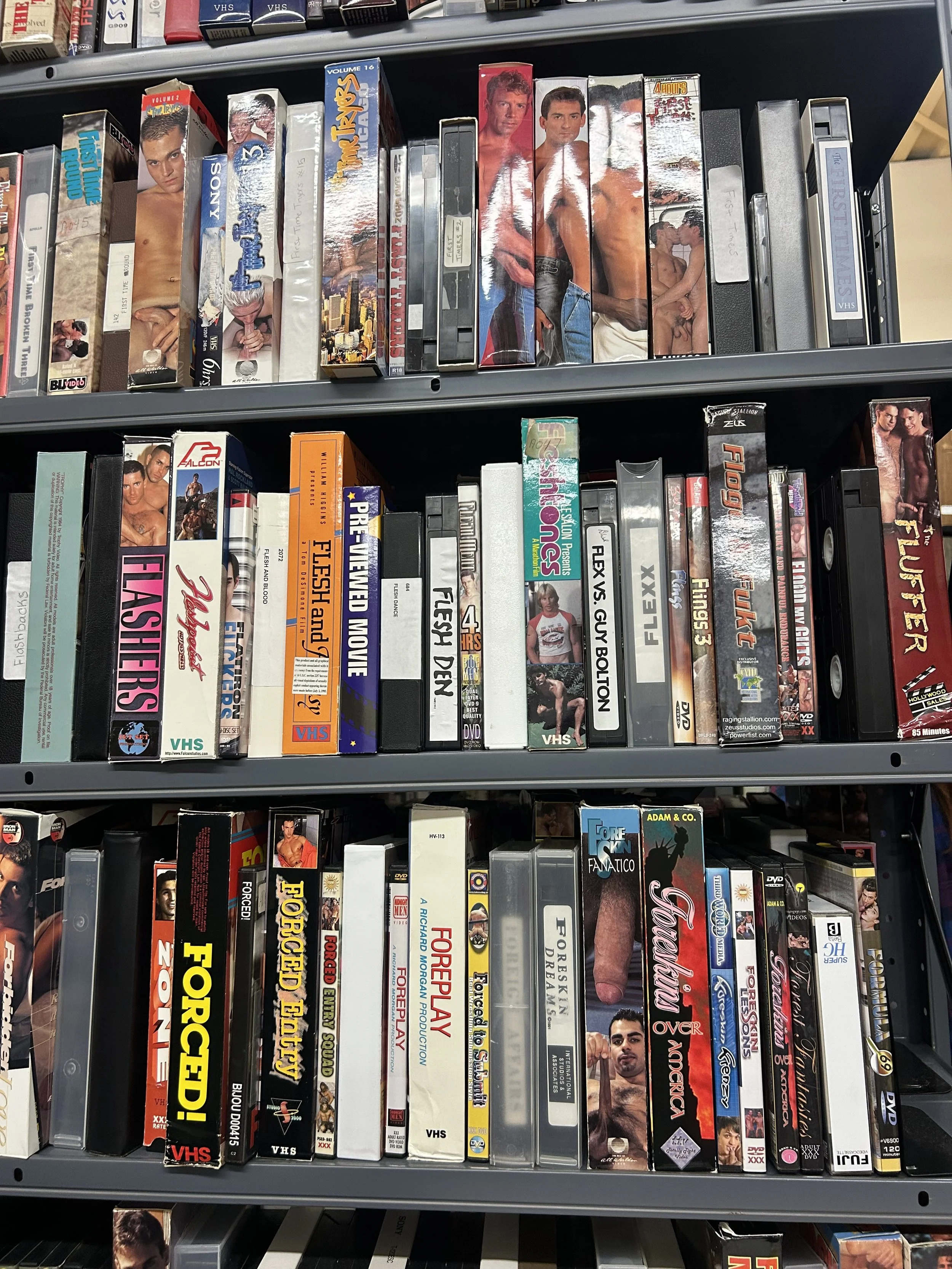
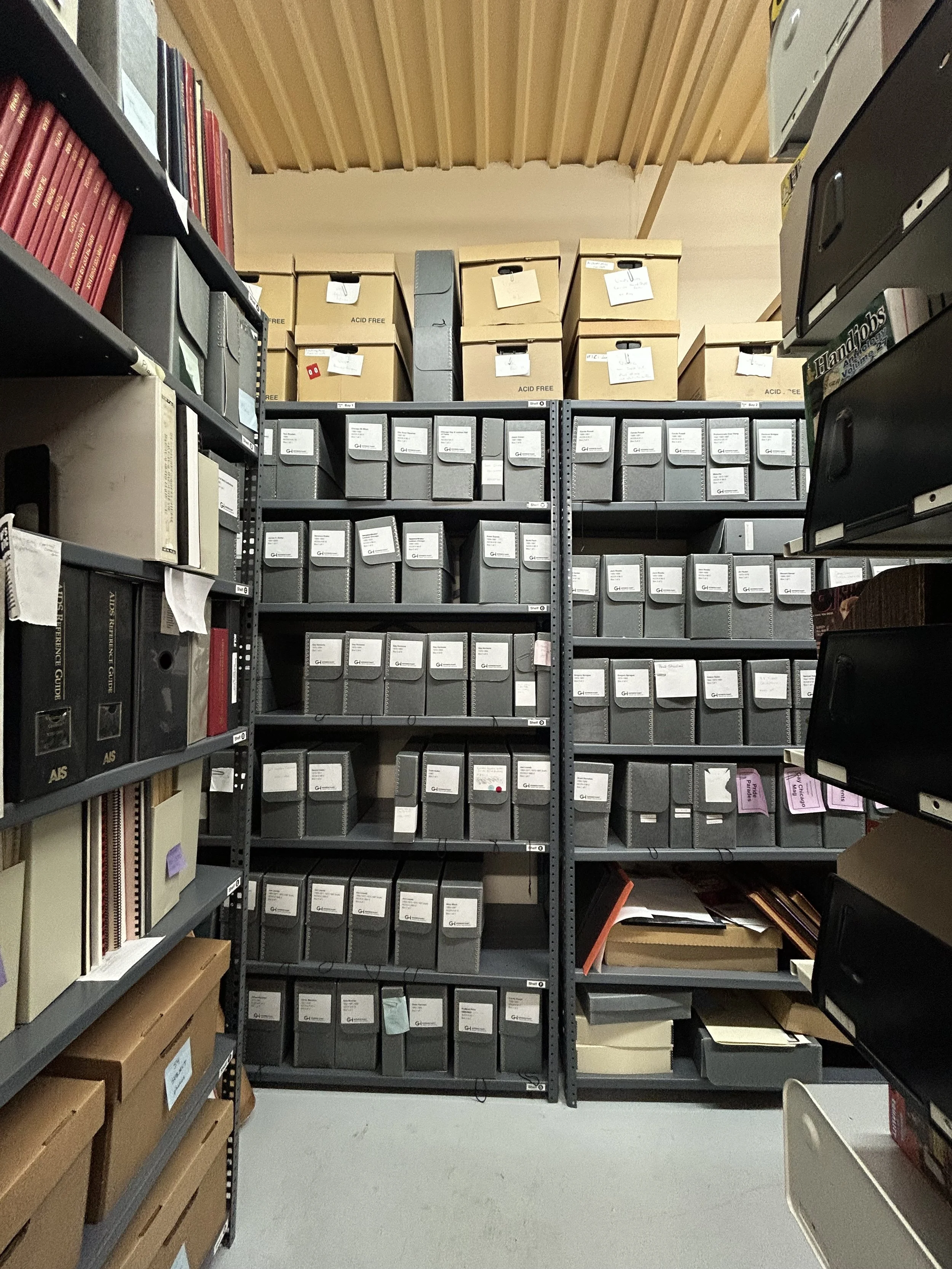
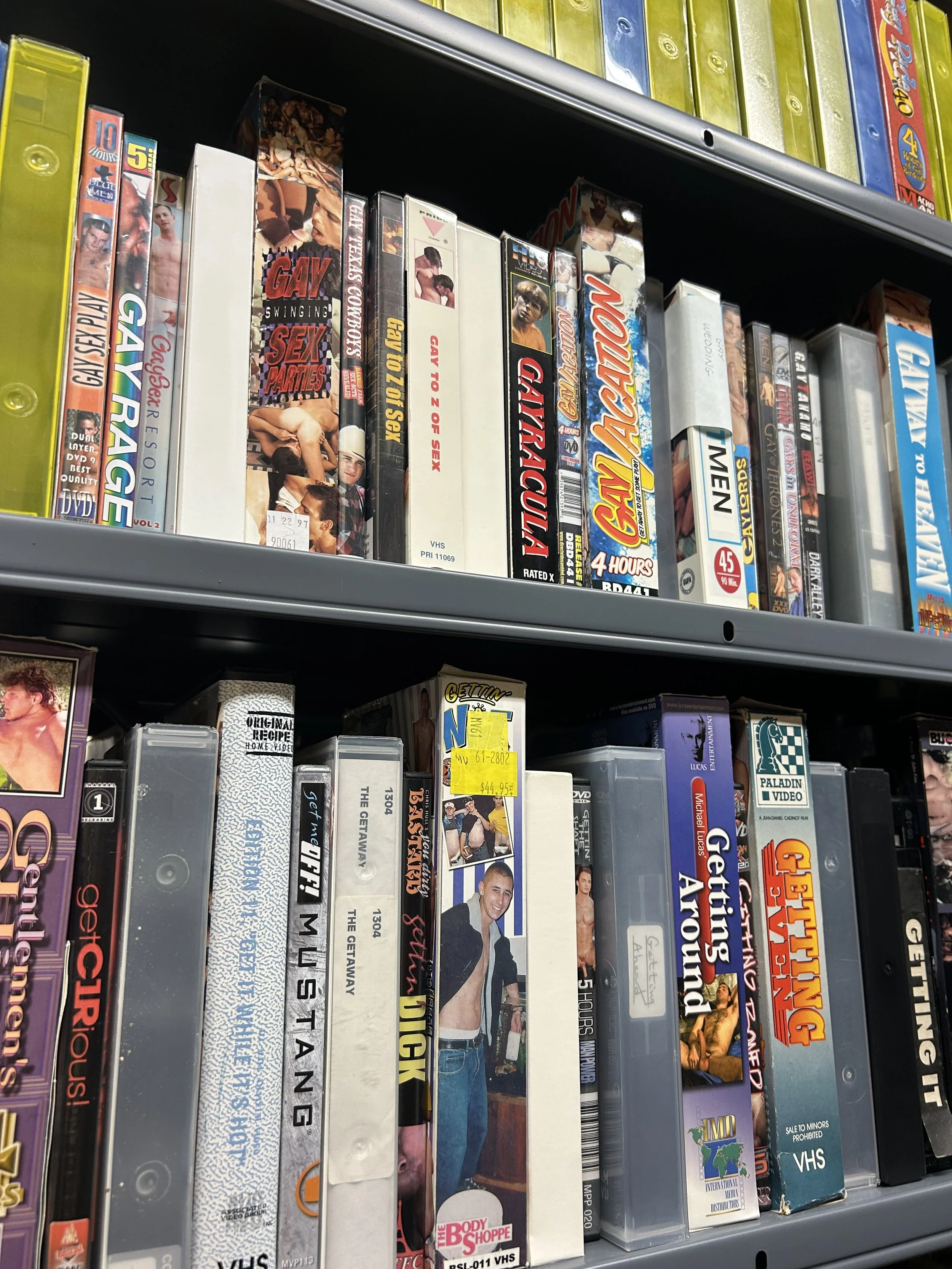
Last week, as part of a class field trip, I visited the Gerber/Hart Library and Archives in Rogers Park, Chicago. I went in with little knowledge, not knowing what to expect. I imagined a small grassroots archive, maybe a room lined with books and carefully labeled folders.
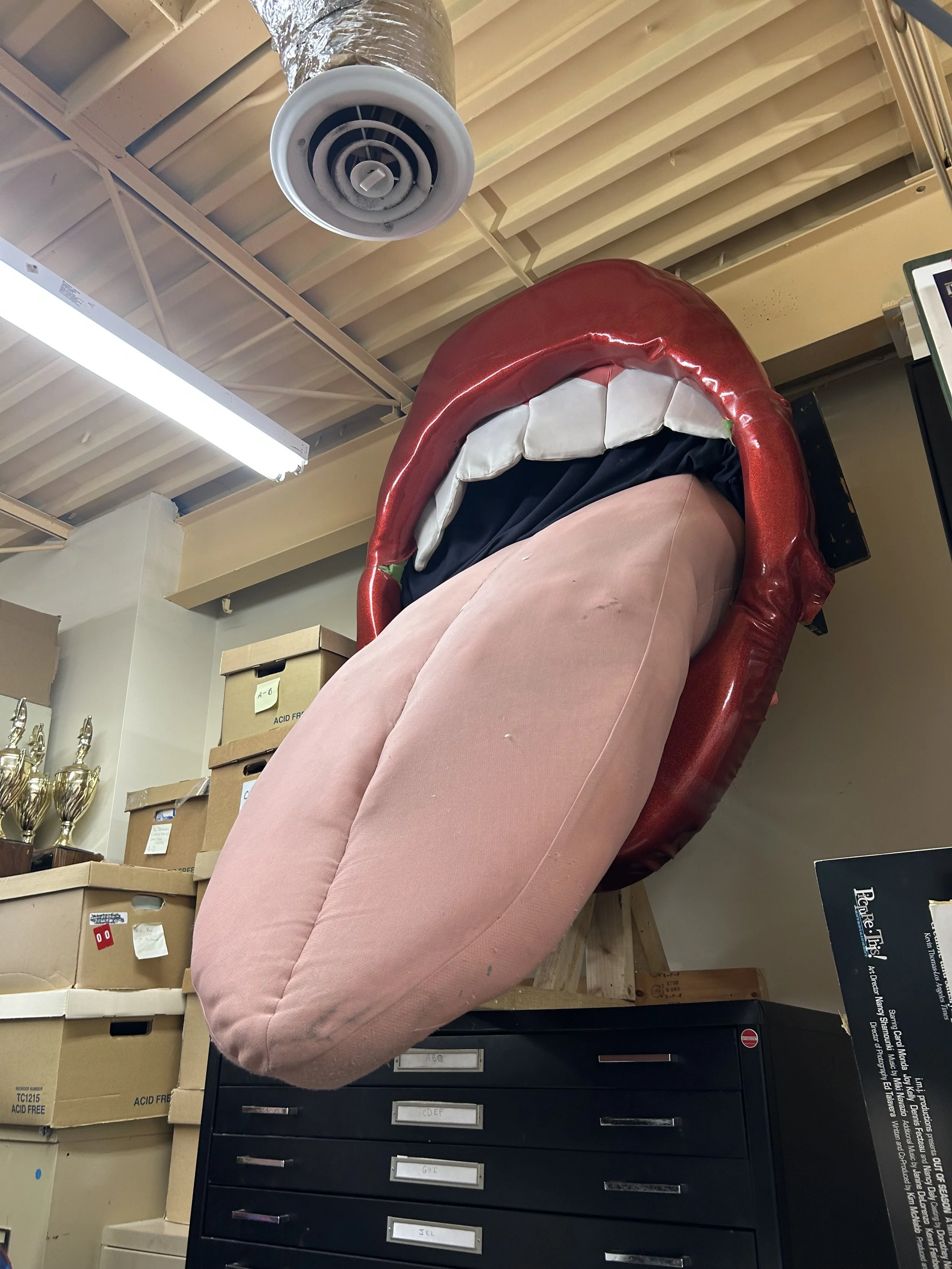
When our tour guide and librarian opened the door to the archive’s cold storage room, I was struck by the quantity of shelved materials. The temperature dropped, and in front of me stood stacks and stacks of boxes stretching across shelving units, dense with history, which, if not preserved by them, would likely have otherwise been discarded. Books, videotapes, drag costumes, folders, magazines, binders. The scale was overwhelming in a way that felt intimate. Every box represented countless individual lives that were attempted to be erased and unrepresented, compressed into one large archive.
The Gerber/Hart Library and Archives was founded in 1981 to collect, preserve, and make accessible the history and culture of LGBTQ+ communities, particularly in Chicago and the Midwest. Hearing this mission while surrounded by the physical evidence of it made the statement feel less institutional and more urgent. Many of these histories were never preserved elsewhere. Without spaces like Gerber/Hart, entire networks of community memory might simply disappear.
The archive did not shy away from certain materials in order to be more traditionally accepted; it did not separate the political from the personal, but instead, it revealed how deeply intertwined they are.
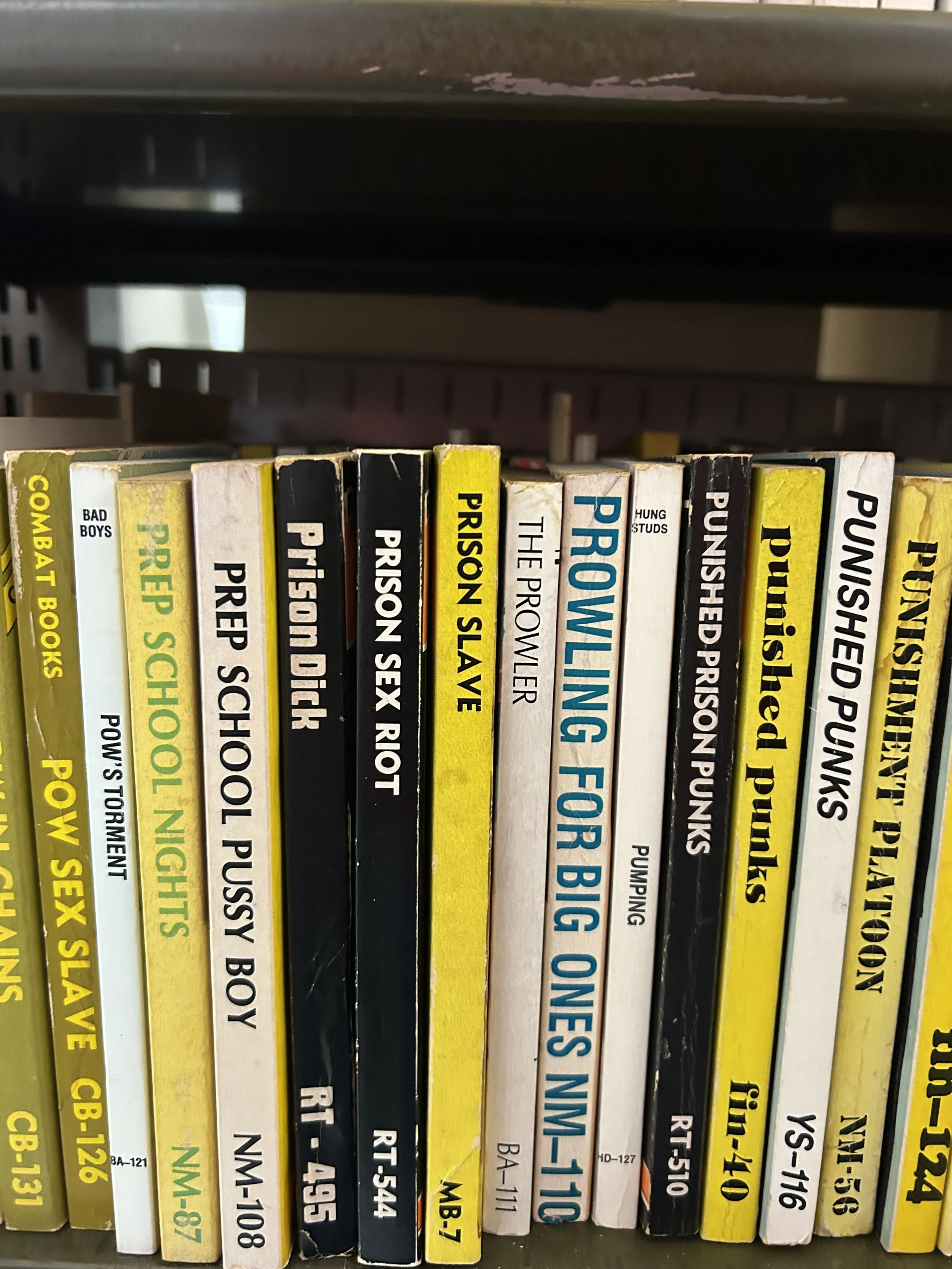
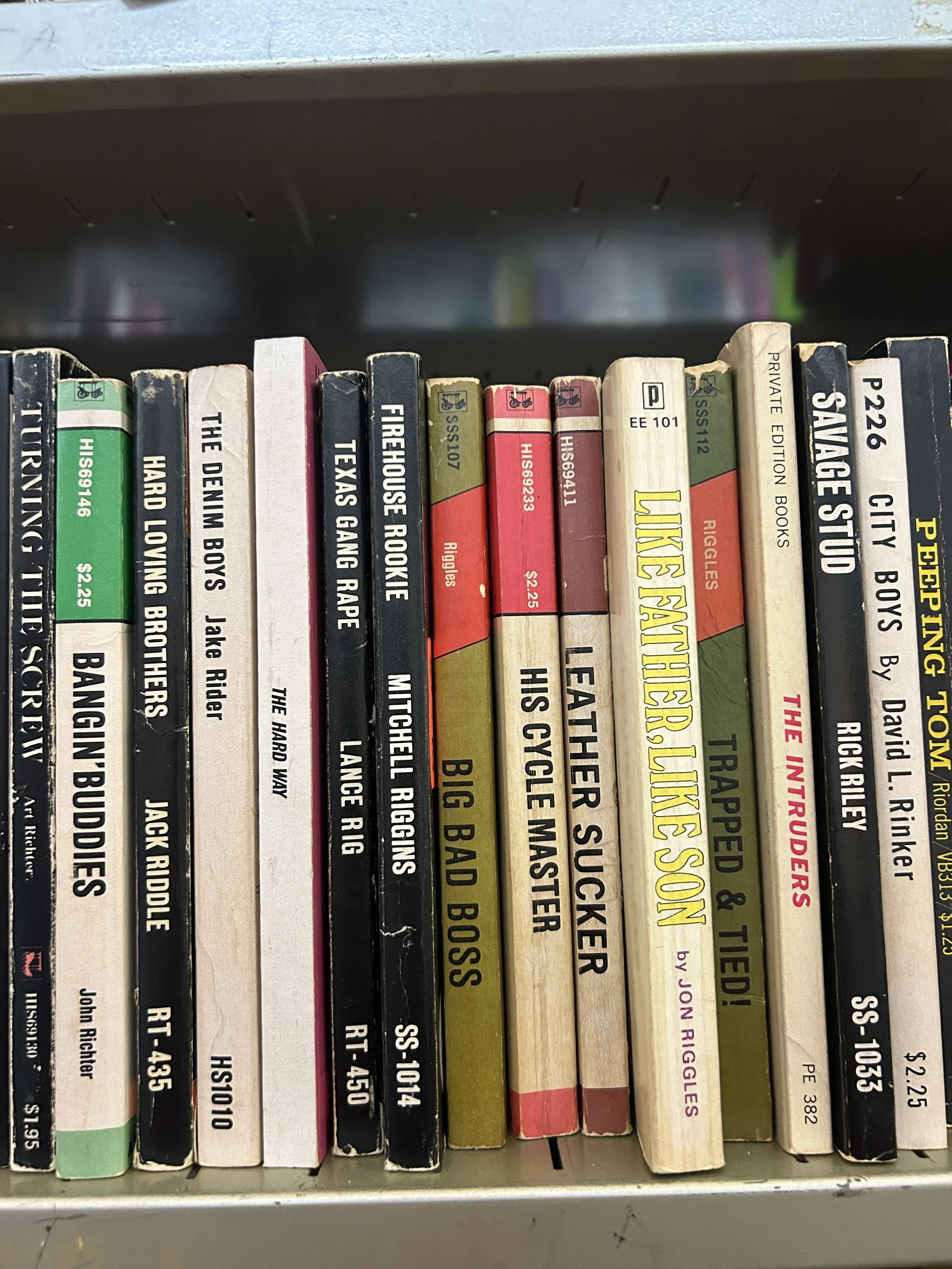
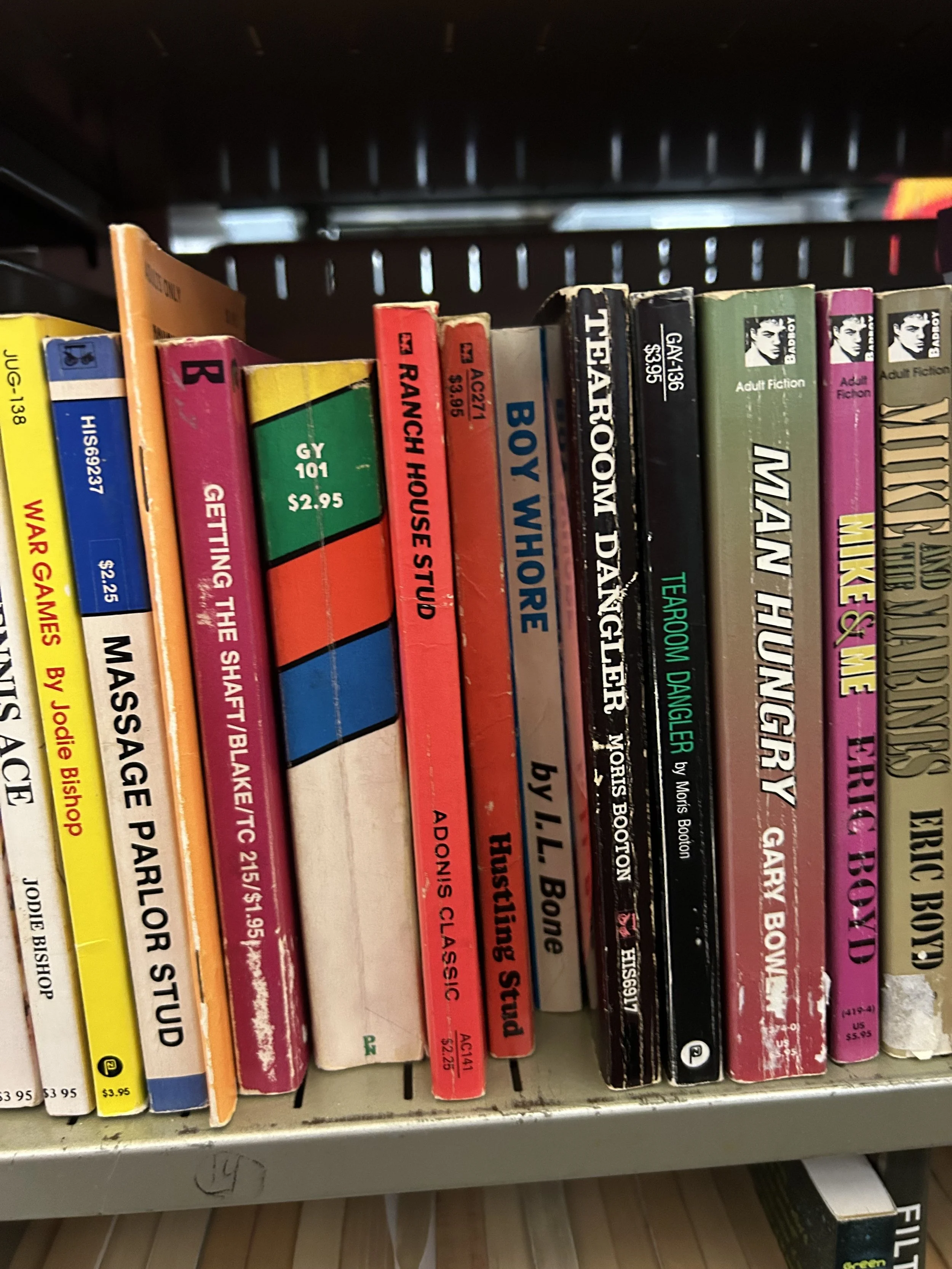
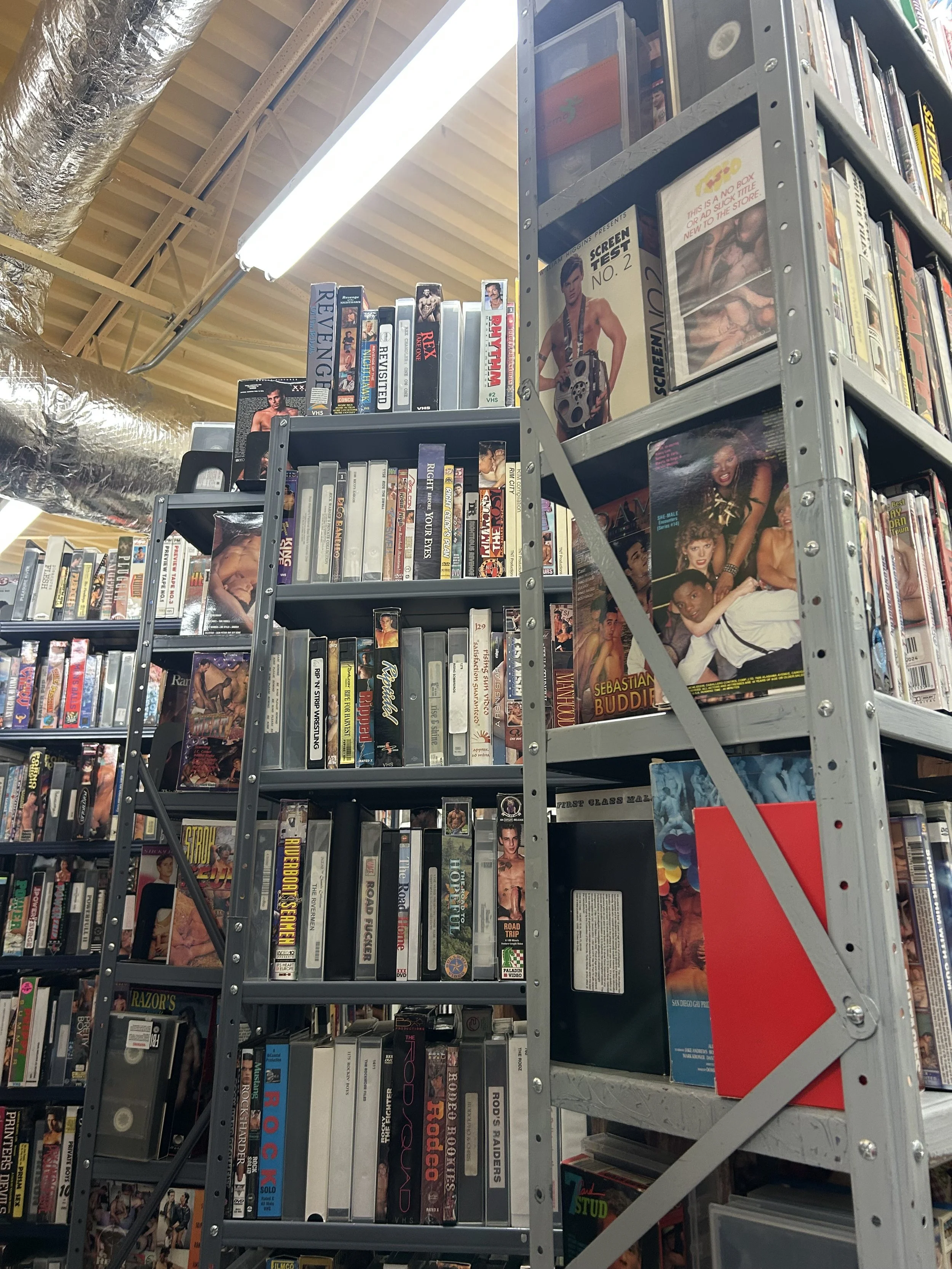
The most obvious material holdings, filling up storage rooms from ground to ceiling, were the stacks of pornographic materials.
Row after row of magazines and videotapes, saved and preserved with the same seriousness and care as any other historical document. At first, the presence of so much explicit material felt surprising, almost disorienting within the traditional image of an archive as a restrained academic space, not to mention on a class field trip. We giggled while pointing out the elaborate titles we saw, such as Meat Master, Horny-Assed Virgin, and Prep School Pussy Boy.
Pornography, in this context, was not treated as novelty or scandal but as cultural evidence. It documented desire, identity formation, aesthetics, community networks, and forms of visibility that existed long before mainstream acceptance. For many LGBTQ+ communities, especially in earlier decades, erotic media functioned as one of the few accessible spaces where queer identities could be expressed openly. These materials recorded sexuality, survival, connection, and self-recognition.
This archive sought to make it clear that intimacy, pleasure, and the complexities of lived experiences are ingrained in history and deserve to be recorded and saved. Preservation here felt expansive rather than selective, refusing to sanitize the past in order to make it more comfortable.
I kept thinking about the act of saving itself. Someone chose to keep these magazines. Someone donated them. Someone decided they mattered enough to catalog, box, and maintain in climate-controlled storage. The archive became visible not just as a collection of objects but as a chain of decisions rooted in care.
This collection emphasizes that the knowledge of LGBTQ+ and other underrepresented groups’ histories fosters understanding and social change. Walking through the stacks proved that clearly. History here was not abstract, but tactile, messy, joyful, political, and most importantly, deeply human.
Leaving the archive, I found myself thinking about accumulation differently. The cold room was filled with materials once considered disposable or marginal. Yet together, they formed an undeniable record of presence. The archive did not just preserve history. It insisted that these lives, desires, and communities were always worth remembering.
I walked out realizing that archives are not neutral containers of the past. They are acts of affirmation, insisting that this mattered enough to keep.
Collecting as Consciousness and Survival: Holding What Has Been
Collecting often naturally begins with the inability to let go. Memories are held tight, stored on phones, pinned on walls, sealed in boxes, sometimes never opened, but never discarded. Moments linger through images that are forever forgotten to be deleted, but instead are preserved. Grief is attempted to be postponed through accumulation, and mourning acts as a form of hoarding. The archive emerges as a psychological mechanism- as a way to endure attachment, loss, and the fear that everything meaningful now will one day cease to exist.
In this sense, the archive functions as a space of consciousness. To collect is to contemplate on time, to return to what has passed. It becomes a ritualistic act, a portal between presence and absence, between memory and imagination. Objects and images are not kept just to document the past, but to hold on to something deeper, to resist disappearance. Through accumulation, we construct systems of endurance, using memory as both a material and a method of survival.
But still, archives operate beyond the emotional realm. They work as a way to shape public truth, identity, and justice, often standing at the center of legal battles, reconciliation processes, and historical reckonings. What is preserved, in turn, becomes what is believed; and what is excluded faces the threat of erasure. Archives possess histories of their own, built through purposeful selection and omission, framing the narratives that will be remembered, and what won’t. Archiving and collecting is an act of devotion and defense, an intimate practice with profound cultural consequences, shaping time, memory, the struggle over truth, survival, and collective meaning.
Curiosity as Care: Early Practices of Collecting
Long before museums, databases, or digital clouds, the urge to collect was already shaping how memory could materialize itself. Objects were gathered, studied, and arranged as a way to understand the world, but also a way to situate oneself in it. During the Renaissance, this impulse took physical form in the intimate spaces known as studiolos and then cabinets of curiosities. These early collections were carefully constructed expressions of identity, curiosity, and longing. They reveal how collecting emerged as both a personal and cultural practice, one rooted in the desire to organize and commemorate experience, narrate the self, and give permanence to fleeting encounters with beauty, knowledge, and the unknown.
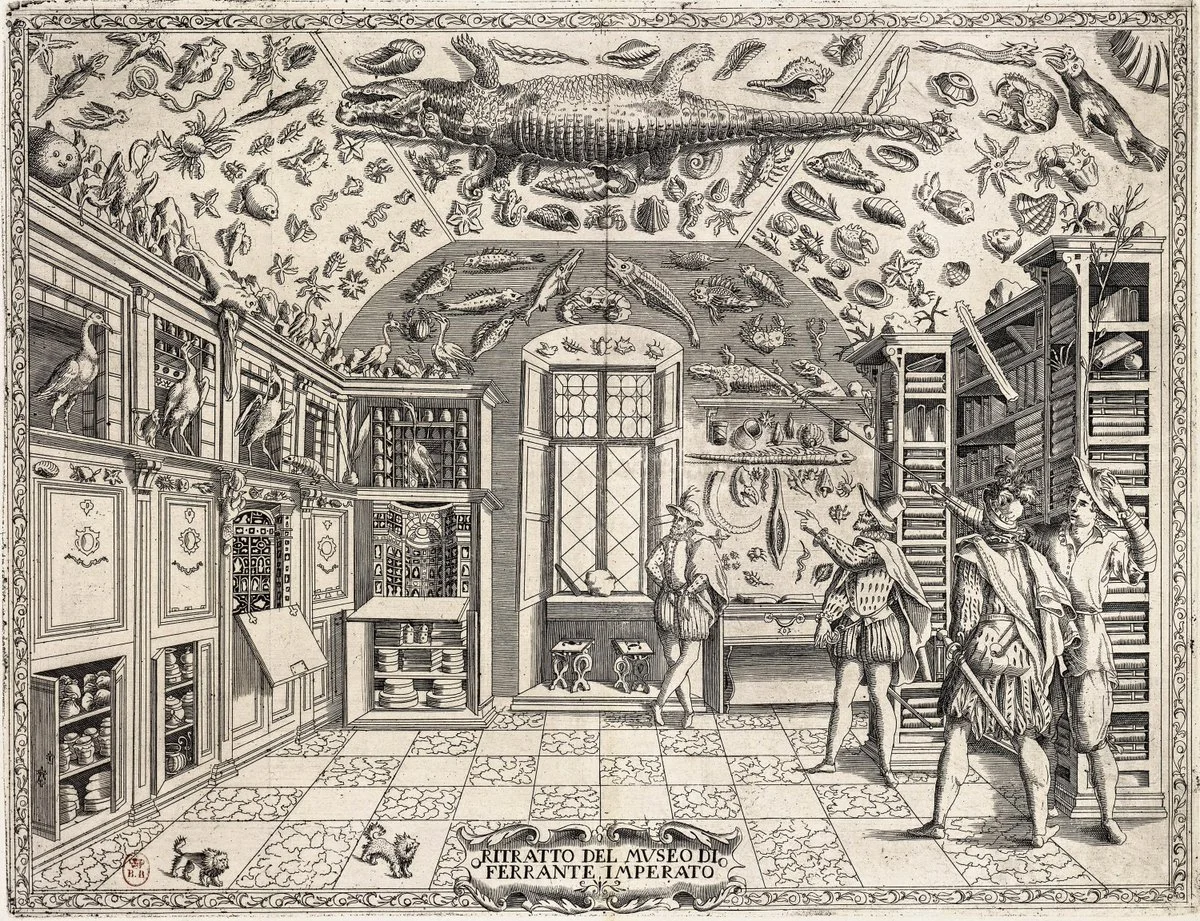
Apothecary Calzolari's Cabinet of Curiosities
During the Renaissance, the studiolo acted as a private study room designed for reading, reflection, and retreat. These rooms stand as one of the earliest forms of the personal archive. This is where scholars and nobles would carefully curate an assemblage of books, works of art, antiquities, scientific instruments, and rare objects. Each item in these collections functioned symbolically and contributed to a visual language that worked to present the collector’s intellect, virtue, and worldliness. The studiolo became a space where objects spoke of class, education, taste, and engagement in classical heritage and global exchange.
Collecting within the studiolo was a creative practice where the owning scholar aimed to present to the world how they wanted to be perceived. Objects were chosen for what they represented about history, scholarship, or philosophical reflection. Eastern artifacts expressed worldly curiosity, libraries demonstrated intellectual authority, and artistic fragments signified timeless ideals. Through carefully curated selections and arrangements, the collector shaped a cohesive portrait of their identity through an environment where material culture became narrative form.
An example of this appears in the Studiolo from the Ducal Palace in Gubbio, where intricate cabinetry frames representations of musical instruments, scientific tools, armor, and symbolic emblems. Painted images of books mirror a renowned library, blurring the line between the real and the represented, and emphasizing that the studiolo was not just a container for objects, but a space of intellectual performance, an archive used for self expression and invention.
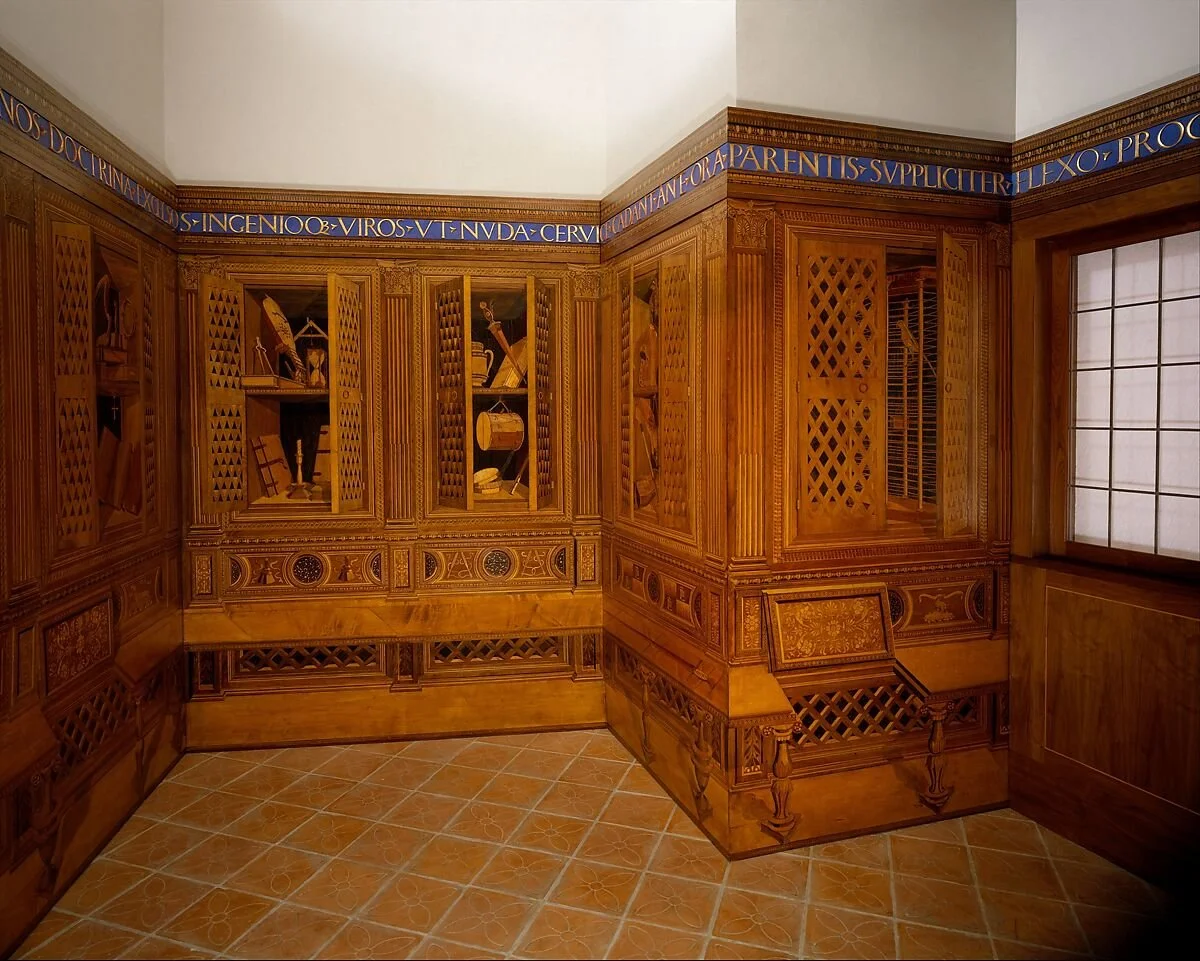
Studiolo from the Ducal Palace in Gubbio
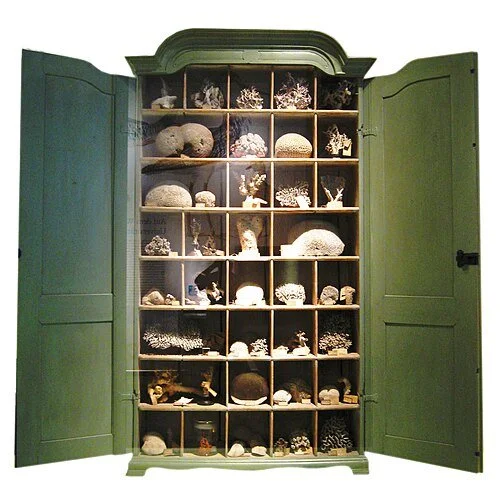
By the mid-sixteenth century, this instinct to collect expanded into the cabinet of curiosities, also known as the Wunderkammer. Unlike the studiolo, the cabinet presented a more encyclopedic and diverse scope. Common objects included natural specimens, minerals, taxidermy, ethnographic artifacts, scientific instruments, devotional objects, and artworks that coexisted within these dense displays. These collections were organized less by discipline and more by wonder and curiosity. The Wunderkammer aimed to present the world through fascination, spectacle, and juxtaposition.
Cabinets served as early public/private spaces of learning and fascination. They functioned as precursors to modern museums, though without the classificatory systems that museums often impose. Here, order existed beneath chaos: objects were sometimes grouped according to categories such as natural versus artificial or sacred versus scientific. Yet the overwhelming density of the displays resisted clarity, inviting discovery and curiosity rather than control.
In these cabinets, one could often see signs of disarray, such as a casually placed note or an object out of alignment, suggesting that these collections were not static archives but evolving ones. Cabinets invited continuous revision, being constantly re-shaped by new acquisitions and shifting interests. Symbolic objects linked to mortality, including preserved remains or memento mori, often punctuated the displays. These reminders anchored the pursuit of wonder to the inevitability of loss, presenting collecting itself as a response to time’s passage.
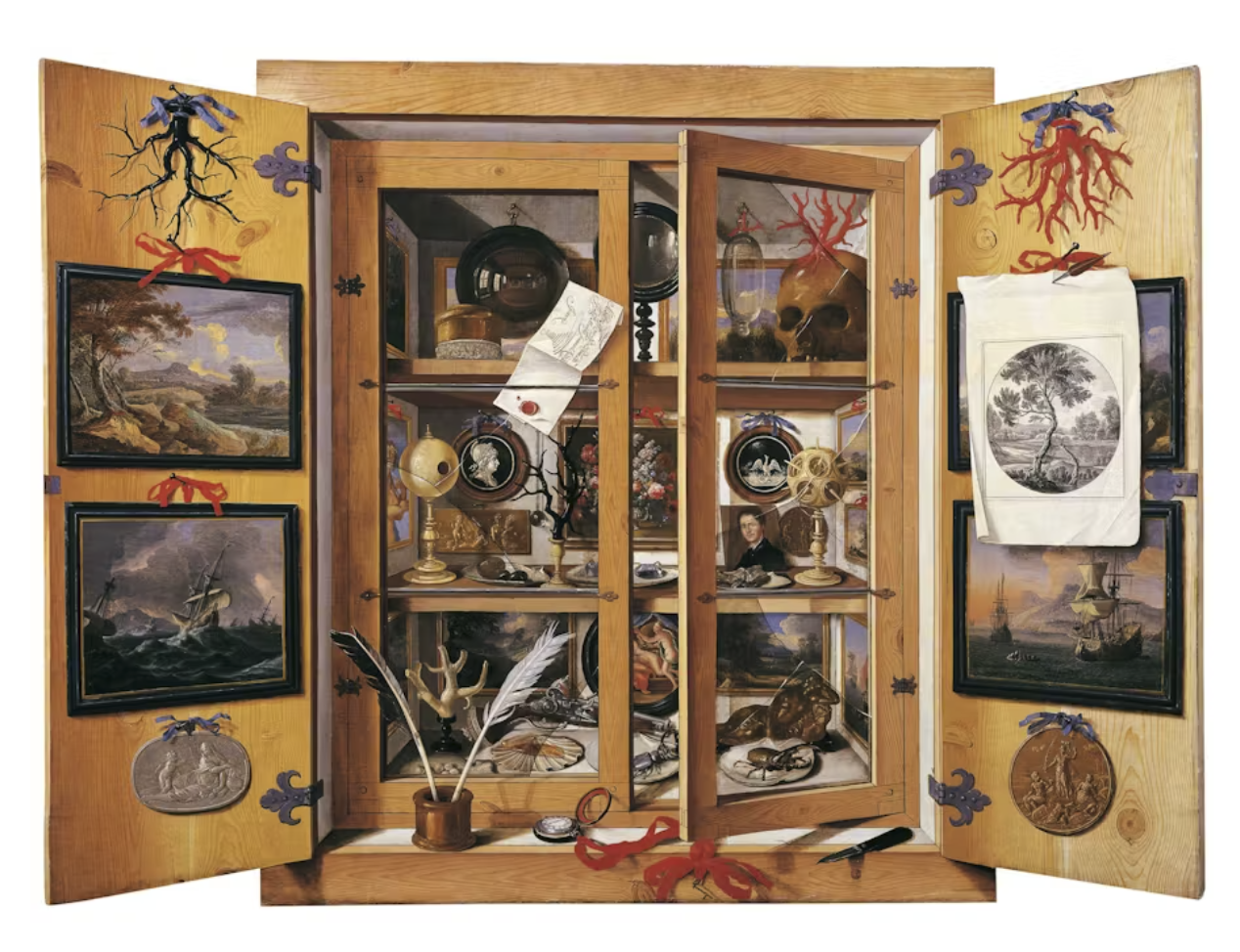
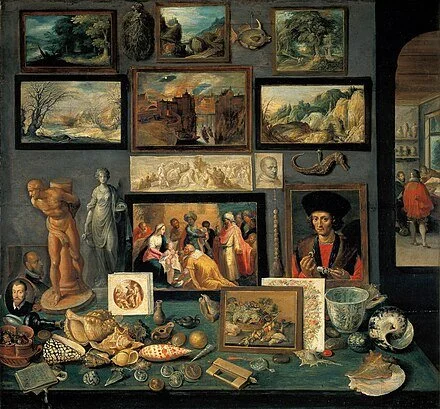
Together, the studiolo and the cabinet of curiosities reveal a shared human impulse: to gather, order, and preserve as a means of understanding both the world and the self. These early archives were not just repositories of objects, but a method of actively shaping memory and identity. What was collected gained importance, as what remained outside the collection disappeared from the narrative. Archives became systems of meaning, tools for constructing histories and defining whose experiences endured.
That impulse continues today, as archives now exist more widely in traditional spaces such as museums and libraries, and also in non-traditional settings such as personal collections, family albums, social media timelines, and cloud storage. They operate across physical and digital realms, shaping how memories are curated, edited, and remembered.
What is chosen for preservation?
What is allowed to fade?
And how do those decisions shape personal and collective identities?
It is within these lingering questions that the archive continues to evolve as both a space of storage and a site of meaning, memory, and becoming.